
Wild Life / magpie
one for sorrow, two for joy

Hello, friends — Happy December! Say “Rabbit, rabbit” and get the good luck. Now is the time for crows in Connecticut. They harass the hawks and drive our dog demented. But I like hearing their racket and insistence on being seen. While I was in Switzerland last month, the magpies caught my eye and attention. They are big and bold and smart and different enough from East Coast crows that I took extra notice. Stories abound and they are lucky in pairs. As always, please send me your small tales of animal encounters, and thank you for being there. — Amy Jean
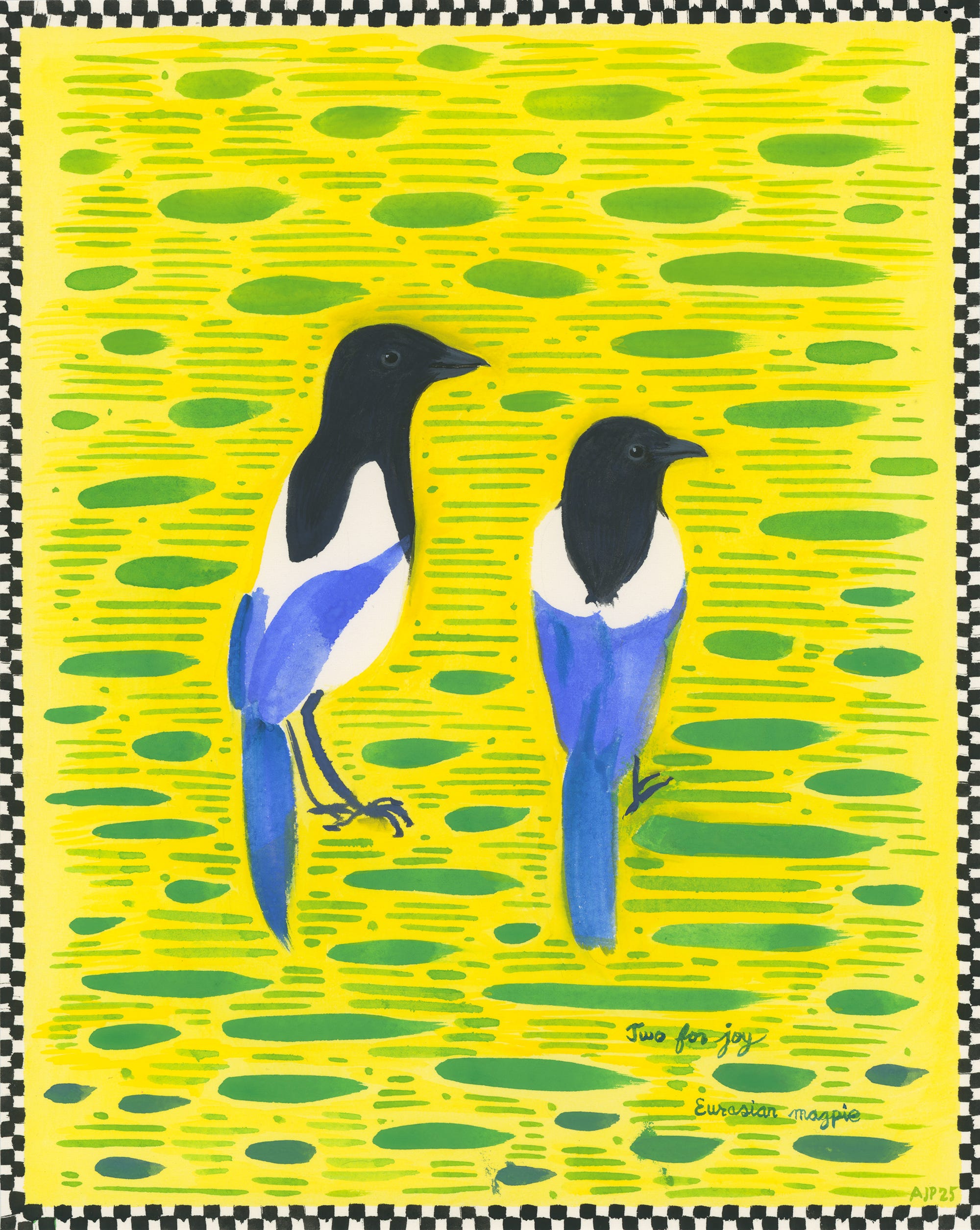
One for sorrow,
Two for mirth,
Three for a wedding,
Four for death.
This version of the magpie nursery rhyme is from a supplement to a 1778 edition of The Plays of William Shakespeare (which you can read here). The birds seem to have struck a superstitious chord among the English, though they are variably considered thieves or harbingers of good or ill across Europe. The magpie was first described in 1555 in the Historiae animalium by Swiss naturalist Conrad Gessner. (You can spend a silly amount of time like I did perusing the book on the Internet Archive; here is the magpie if I’m not mistaken. All of the illustrations are fantastic.)
It was fitting, then, that the magpie was the most widespread and noticeable bird when I was in Bern, Switzerland, last month. On a day off I went for a jog and slowed down to watch a “mischief” of them at the edge of a green field. They are big, elegant creatures, plumed in sharp black and white with iridescent blue, who paused to watch me, too.
Eurasian magpies (Pica pica) are corvids and related to crows, ravens, and the black-billed magpies of western North America (which look very similar but are a separate species). They are known for their intelligence and use of tools. I think my favorite story is from 2023, when an enormous nest was discovered in Antwerp made out of 1,500 of the metal spikes that are used to deter birds from roosting on building ledges. The magpies were using the spikes in the very same way that we use them—to keep birds from intruding.
Magpie pairs are monogamous over years and work together to construct their intricate nests and raise chicks. They do well around humans and have a wide-ranging and omnivorous diet, which makes them adaptable.
Related to the nursery rhyme above, if you see one magpie alone you are meant to greet it so that it won’t inflict its sorrow on you. I think we save our wildest superstitions for the creatures we sense are rivals. When I stopped to watch the magpies in Bern, I think I did actually greet them. Not because I knew the superstition, but because they were such a presence. It was like walking into a room and having everyone turn to look at you. The natural thing to say is, well, “hello.”
A more modern version of the poem goes:
One for sorrow,
Two for joy,
Three for a girl,
Four for a boy,
Five for silver,
Six for gold,
Seven for a secret never to be told.
When I picked up my jog and left the birds behind I heard them chattering again, telling those secrets that only they know.
Eurasian magpie links—
See the crazy nest of metal spikes for yourself [via Naturalis Biodiversity Center].
Hear their chattering at Cornell Lab [here]. The “mag” in magpie apparently comes from the nickname for “Margaret” [via the site Useless Etymology].
This video of a magpie following a cat and pretending not to (!) made me laugh [via Reddit].
Also —
My “two for joy” magpie drawing is for sale. Some of the proceeds will go to the National Audubon Society.
Wild Life #57 / this free monthly newsletter is a place to learn about the life around us, one sorrowful magpie at a time. I do this because I’m not sure what to do about the millions of species in danger of extinction. It means something to see and enjoy the life around us. If you enjoy reading, please share with friends and family. See you in January 2026!
Happy December, Amy Jean!
I adore magpies. Don’t get to see them very often. Here in my part of Oregon, they stick to the drier east side of the Cascades. Every so often one or two meander over to visit. The crispness of those blue-black feathers against the sparkle of white makes them seem just a little better dressed than their other Corvid cousins.
The magpie stalking the cat is a delight!
Hope all is well and happy with you and yours!